What Makes Interactive Kids' Books Different from Regular Books?
Jan 20, 2026
SMPL
New Delhi [India], January 20: In the current fast-changing world, the way children learn and read has changed a lot. Earlier reading was primarily about printed text and picture. Now, learning is more fun, playful and experience-based. This is where the interactive kids books differ from regular books.
Parents, teachers and educators are increasingly opting for kids books that do more than just tell a story. They want books that help kids to think, respond, speak, write, and explore ideas on their own. Interactive books are created just for this reason.
This article explains in detail what makes interactive books different, what's the importance of interactive books, and how they help children grow mentally, emotionally and academically.
Understanding Regular books for kids
Regular books for children typically focused with telling stories or simple information. They contain text, illustrations and sometimes rhymes. These books are beneficial for the formation of reading habits and imagination.
However, regular books tend to use a one-way learning approach. The child reads or listens, but there is not a lot of scope for participating. The child is still a passive learner.
Regular kids books are important, especially at early stages, but they may not always be the right fit for the learning needs of modern kids who learn best by doing.
What Are Interactive Kids books?
Interactive kids' books are books that are designed for actively involvement of children in the reading process. Instead of just reading, the children are encouraged to:
- Answer questions
- Trace letters
- Color images
- Solve puzzles
- Stick, draw, match, or speak
These books make reading an activity based learning experience.
Interactive books include: phonics books, coloring books for kids, sticker books for kids, activity books for kids. Each of these formats is focused on skill-building while keeping children engaged.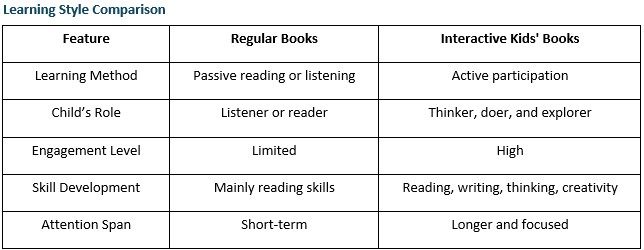
Interactive books help children learn through experience, not memorization.
Why Interactive Books Are Better for Child Development?
Children learn best when they are curious and in the mix. This natural learning style is supported by interactive books.
1. Encourage Active Learning
Interactive books encourage children to respond, rather than to merely read. This helps to improve concentration and understanding. When children solve activities or answer questions, they remember the concepts better.
2. Improve Language and Communication Skills
Books like phonics books help children to relate sounds with letters. This enhances pronunciation, spelling and early reading skills. Unlike normal books, phonics-based interactive content gives kids the opportunity to practice sounds over and over again.
3. Develop Creativity and Imagination
Coloring books for kids give kids the opportunity to express emotion and creativity with no constraints. They pick their colors, imagine the scenes, and write their own versions of stories.
Creativity is one of the crucial skills in life and interactive books foster creativity in a natural way.
Role of Activity Based Learning in Interactive Books
Interactive books are closely associated with activity-based learning. Children learn concepts while carrying out small tasks.
This method helps in:
- Better memory retention
- Improved logical thinking
- Stronger problem solving skills
Unlike regular kids books, interactive formats encourage trial and error and that builds confidence.
Types of Interactive Children's Books
Interactive books are available in numerous formats, which all have specific learning purposes.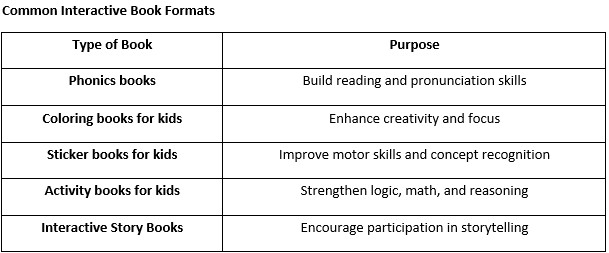
Each type supports different stages of learning and development.
How Interactive Books Support Early Learning?
Early childhood is the learning foundation stage. Interactive books aid children to develop a firm basics.
Reading and Writing Skills
Children practice letters, words, and sentences rather than just seeing them. This helps in improving writing readiness.
Thinking and Solving Problems
Matching, puzzles and easy logic activities help children to think independently. Regular books do not normally provide this opportunity.
Emotional Development
When children accomplish things successfully, they become confident and motivated. This positive learning experience helps them explore more.
Why Modern Parents Love Interactive Kids Book?
Parents today are looking for learning resources that offer education and fun. Interactive books satisfy this need.
They help to limit screen time and provide engaging content. Instead of digital games, children are fond of hands-on activities that increase learning.
Parents also find activity books for kids useful for:
- Travel learning
- Holiday practice
- Skill revision
Interactive Books vs Digital Learning Tools
Digital apps and videos are in demand but often they are harmful. Interactive books provide physical involvement with no distractions.
Children write and draw and solve problems with their hands, which helps improve brain development.
Unlike screens, books are better for focus and less stressful for the eyes.
phonics books,Children who learn through interactive methods learn to love learning at an early age. They associate books with fun and not pressure.
This habit persists on to higher classes, where learning is more structured.
Regular kids books are helpful, but interactive books help prepare children for real-world learning challenges.
Role of Interactive Books in School Readiness
Interactive books prepare children for school by developing: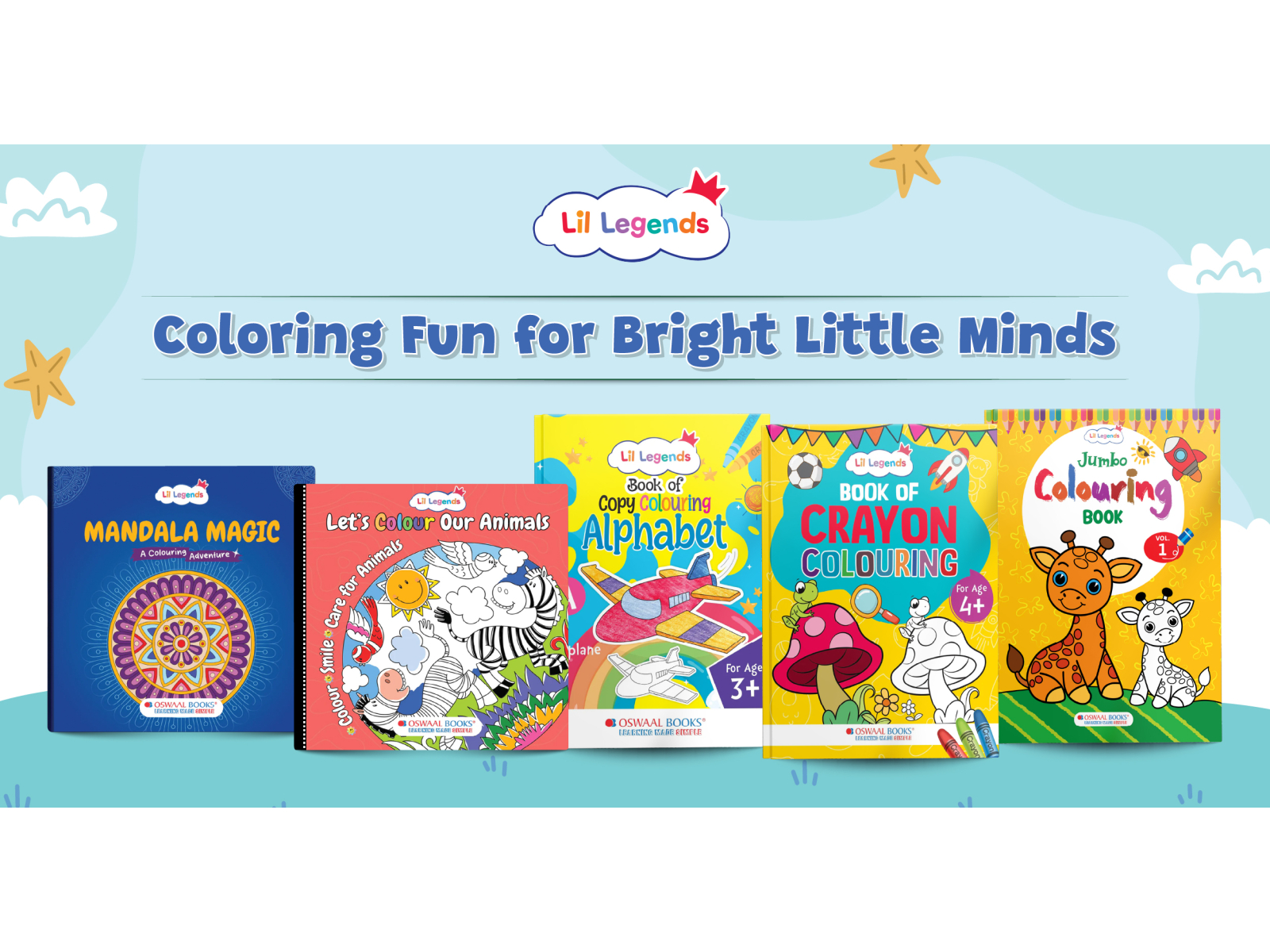
- Writing skills
- Listening and understanding
- Basic math understanding
- Confidence to participate
Books such as phonics books and activity books for kids are especially helpful before the start of formal schooling.
Are Interactive Books Just for Small Children?
No. Interactive books are useful across the age group.
For younger children, they target on basics. For older children, they get more complex and concept-driven.
This flexibility makes interactive books suitable for ongoing learning.
How Teachers Use Interactive Books in Classrooms?
Teachers use interactive books to make lessons interesting and engaging. Children love group activities, coloring work and problem solving.
Interactive learning also makes it easier for teachers to know when a learning gap occurs.
Benefits of Interactive Kids' Books in a Glance
Interactive books help kids develop in various ways:
- Cognitive development
- Language skills
- Creativity
- Confidence
- Independent thinking
Regular books are good for reading, but interactive books are good for overall development.
FAQs on Interactive Kids' Books
1. What are interactive kids' books?
Interactive kids' books are books that require active participation from children through activities, questions, coloring, or problem-solving.
2. How are interactive books different from regular books?
Regular books focus on reading, while interactive books focus on learning by doing.
3. Are interactive books better than regular kids books?
Both are important, but interactive books provide deeper engagement and skill development.
4. Do phonics books help in early reading?
Yes, phonics books help children understand sound-letter relationships, which improves reading skills.
5. Why are activity books for kids important?
Activity books for kids help develop logic, creativity, and confidence through practice-based learning.
6. Can coloring books for kids improve learning?
Yes, coloring books for kids improve focus, creativity, and hand-eye coordination.
Final Thoughts: Choosing the Right Learning Tools
Interactive kids book is not just a reading material. They are learning companions to help children explore, think and grow. In a world where attention spans are decreasing, interactive books keep learning meaningful and enjoyable.
Regular books will always have their place, but interactive formats prepare children for how they learn in modern life.
(ADVERTORIAL DISCLAIMER: The above press release has been provided by SMPL. ANI will not be responsible in any way for the content of the same.)