New Study Reveals: Europe as India's Most Trusted Value Partner
Mar 06, 2026
VMPL
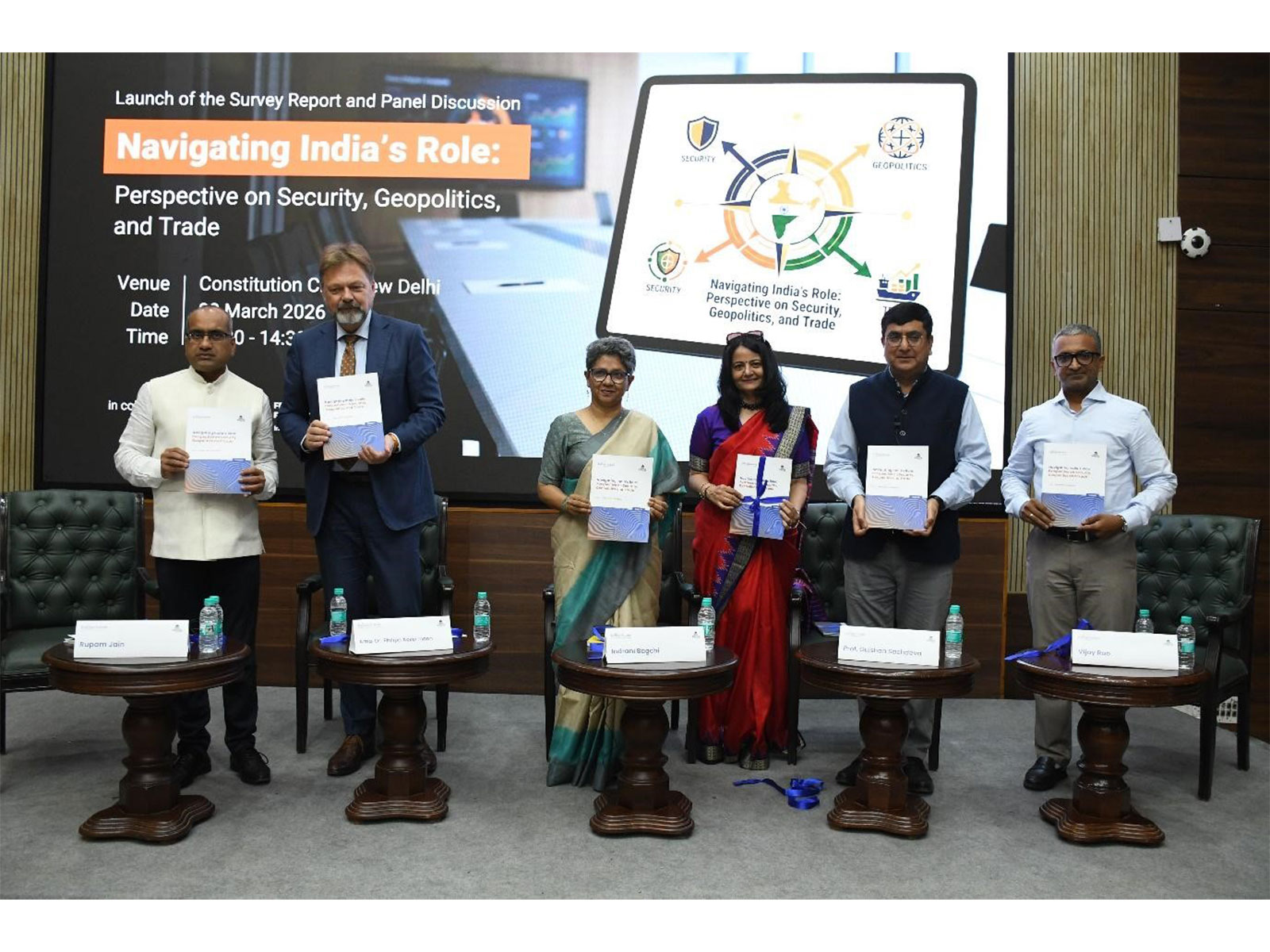
New Delhi [India], March 6: A new study - Navigating India's Role: Perspectives on Security, Geopolitics, and Trade, was released in New Delhi. The event featured Dr. Philipp Ackermann, German Ambassador to India and Bhutan, alongside Mr. Sujeet Kumar, Member of Parliament, and Vijay Rao from Rajneethi - the survey polling institute. During the launch, Dr. Ackermann appreciated the study's revelation that Indians are keenly aware of Europe, the EU, and Germany.
The report states that Indians are seeking strategic autonomy and leadership within the Global South. It also underscores a sophisticated understanding of trade and security at a moment when longstanding global assumptions are shifting.
While India is viewed as a rising economic force, unemployment and environmental pollution remain the top domestic concerns. A total of 19.3% of respondents highlighted unemployment as India's biggest challenge, followed by environmental pollution at 14.1%.
The nation's foreign policy is perceived as increasingly focused on its role as a leader of the Global South, a position supported by 28% of respondents.
In terms of global power dynamics, the US is seen as the military frontrunner, followed by China. Meanwhile, the EU and China are viewed as emerging economic powers, with China perceived as being slightly ahead of the US technologically.
On the Non-Aligned Movement (NAM), 50.4% of respondents feel that India should reconsider its stance.
These findings suggest a nuanced view of leadership where respondents balance traditional security ties with the practicalities of modern economic competition.
There is strong support for deeper economic integration with the EU, which is highly valued for education and career opportunities. Regarding economic models, 55.6% of respondents prefer a social market economy, while 22.5% favor a liberal market system. This preference indicates a desire to balance rapid growth with robust social welfare. Additionally, 54.7% of those surveyed believe that India's young demography and large labor force are its greatest advantages for future growth.
When assessing international organizations, the G20 is the undisputed leader. 84% of respondents attach high importance to the G20, which is likely a lingering effect of India's successful presidency in 2023.
Furthermore, nearly 80% believe India's soft power, including culture, tourism, and diaspora influence, is enhancing its global standing.
Indians are broadly confident of their future with 70 percent saying they expect their country to be a world power in 20 years. There is a surprising degree of unanimity among Indians from all walks of life about their country's relationship with the world.
Commissioned by the Friedrich Naumann Foundation for Freedom (FNF) - India and the Kalinga Kusum Foundation, the survey was executed by Rajneethi and polled 1,396 urban elites.
During the panel discussion, Vijay Rao emphasized that the survey captures the voices of urban elites whose aspirations are representative of India's shifting geopolitical landscape. He also highlighted the sophisticated methodology, technology and extensive efforts required to conduct the quantitative survey across 25 major cities in India.
The full report is available for download on the FNF website: https://www.freiheit.org/publikation/navigating-indias-role-perspective-security-geopolitics-and-trade
(ADVERTORIAL DISCLAIMER: The above press release has been provided by VMPL. ANI will not be responsible in any way for the content of the same.)